Sunday, 15 March 2020

Coronavirus: What it does to the body


The coronavirus emerged in only December last year, but already the world is dealing with a pandemic of the virus and the disease it causes - Covid-19.
For most, the disease is mild, but some people die.
So how is the virus attacking the body, why are some people being killed and how is it treated?

Incubation period

This is when the virus is establishing itself.
Viruses work by getting inside the cells your body is made of and then hijacking them.
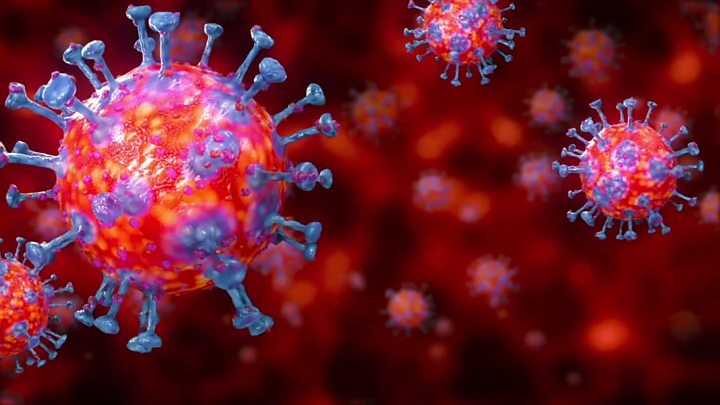
The coronavirus, officially called Sars-CoV-2, can invade your body when you breathe it in (after someone coughs nearby) or you touch a contaminated surface and then your face.
It first infects the cells lining your throat, airways and lungs and turns them into "coronavirus factories" that spew out huge numbers of new viruses that go on to infect yet more cells.
At this early stage, you will not be sick and some people may never develop symptoms.
The incubation period, the time between infection and first symptoms appearing, varies widely, but is five days on average.
Media captionEverything you need to know about the coronavirus – explained in one minute by the BBC's Laura Foster

Mild disease

This is all most people will experience.
Covid-19 is a mild infection for eight out of 10 people who get it and the core symptoms are a fever and a cough.
Body aches, sore throat and a headache are all possible, but not guaranteed.
The fever, and generally feeling grotty, is a result of your immune system responding to the infection. It has recognised the virus as a hostile invader and signals to the rest of the body something is wrong by releasing chemicals called cytokines.
These rally the immune system, but also cause the body aches, pain and fever.
The coronavirus cough is initially a dry one (you're not bringing stuff up) and this is probably down to irritation of cells as they become infected by the virus.
Some people will eventually start coughing up sputum - a thick mucus containing dead lung cells killed by the virus.
These symptoms are treated with bed rest, plenty of fluids and paracetamol. You won't need specialist hospital care.
This stage lasts about a week - at which point most recover because their immune system has fought off the virus.
However, some will develop a more serious form of Covid-19.
This is the best we understand at the moment about this stage, however, there are studies emerging that suggest the disease can cause more cold-like symptoms such as a runny nose too.

Banner image reading 'more about coronavirus'
Banner

Severe disease

If the disease progresses it will be due to the immune system overreacting to the virus.
Those chemical signals to the rest of the body cause inflammation, but this needs to be delicately balanced. Too much inflammation can cause collateral damage throughout the body.
"The virus is triggering an imbalance in the immune response, there's too much inflammation, how it is doing this we don't know," said Dr Nathalie MacDermott, from King's College London.
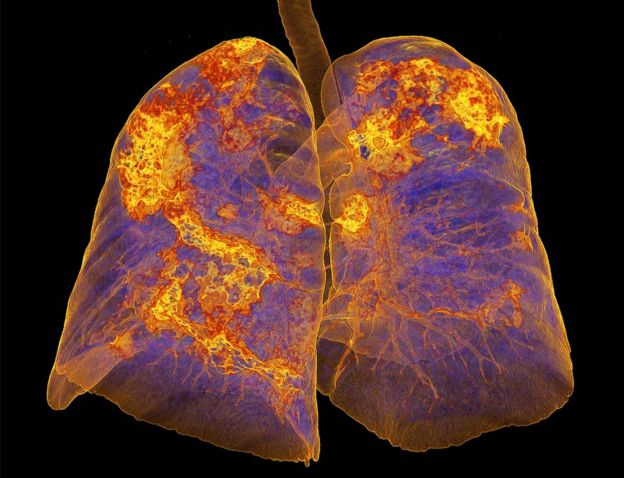
Lungs infected with coronavirusImage copyrightSPL
Image captionScans of lungs infected with coronavirus showing areas of pneumonia
Presentational white space
Inflammation of the lungs is called pneumonia.
If it was possible to travel through your mouth down the windpipe and through the tiny tubes in your lungs, you'd eventually end up in tiny little air sacs.
This is where oxygen moves into the blood and carbon dioxide moves out, but in pneumonia the tiny sacs start to fill with water and can eventually cause shortness of breath and difficulty breathing.
Some people will need a ventilator to help them breathe.
This stage is thought to affect around 14% of people, based on data from China.

Critical disease

It is estimated around 6% of cases become critically ill.
By this point the body is starting to fail and there is a real chance of death.
The problem is the immune system is now spiralling out of control and causing damage throughout the body.
It can lead to septic shock when the blood pressure drops to dangerously low levels and organs stop working properly or fail completely.
Acute respiratory distress syndrome caused by widespread inflammation in the lungs stops the body getting enough oxygen it needs to survive. It can stop the kidneys from cleaning the blood and damage the lining of your intestines.
"The virus sets up such a huge degree of inflammation that you succumb... it becomes multi-organ failure," Dr Bharat Pankhania said.
And if the immune system cannot get on top of the virus, then it will eventually spread to every corner of the body where it can cause even more damage.
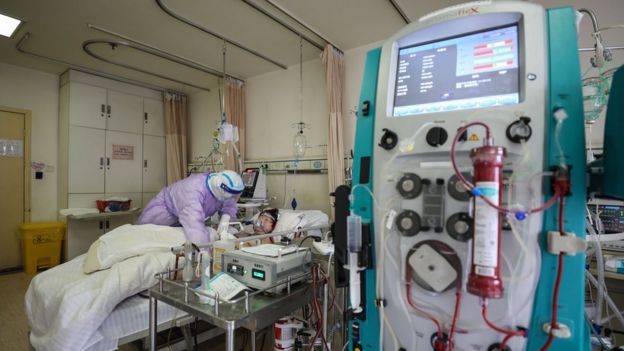
ECMO machineImage copyrightGETTY IMAGES
Image captionA patient being treated with an ECMO machine
Treatment by this stage will be highly invasive and can include ECMO or extra-corporeal membrane oxygenation.
This is essentially an artificial lung that takes blood out of the body through thick tubes, oxygenates it and pumps it back in.
But eventually the damage can reach fatal levels at which organs can no longer keep the body alive.

The first deaths

Doctors have described how some patients died despite their best efforts.
The first two patients to die at Jinyintan Hospital in Wuhan, China, detailed in the Lancet Medical journal, were seemingly healthy, although they were long-term smokers and that would have weakened their lungs.
The first, a 61-year-old man, had severe pneumonia by the time he arrived at hospital.
He was in acute respiratory distress, and despite being put on a ventilator, his lungs failed and his heart stopped beating.
He died 11 days after he was admitted.
The second patient, a 69-year-old man, also had acute respiratory distress syndrome.
He was attached to an ECMO machine but this wasn't enough. He died of severe pneumonia and septic shock when his blood pressure collapsed.
Follow James on Twitter.

Coronavirus information: What should I do?
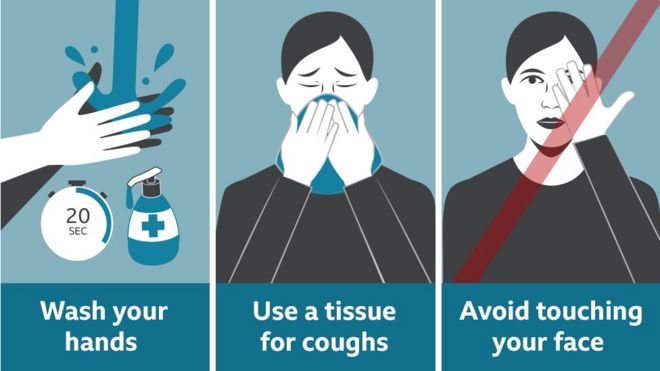
Three images giving government advice: Wash your hands, Use a tissue for coughs, avoid touching your face

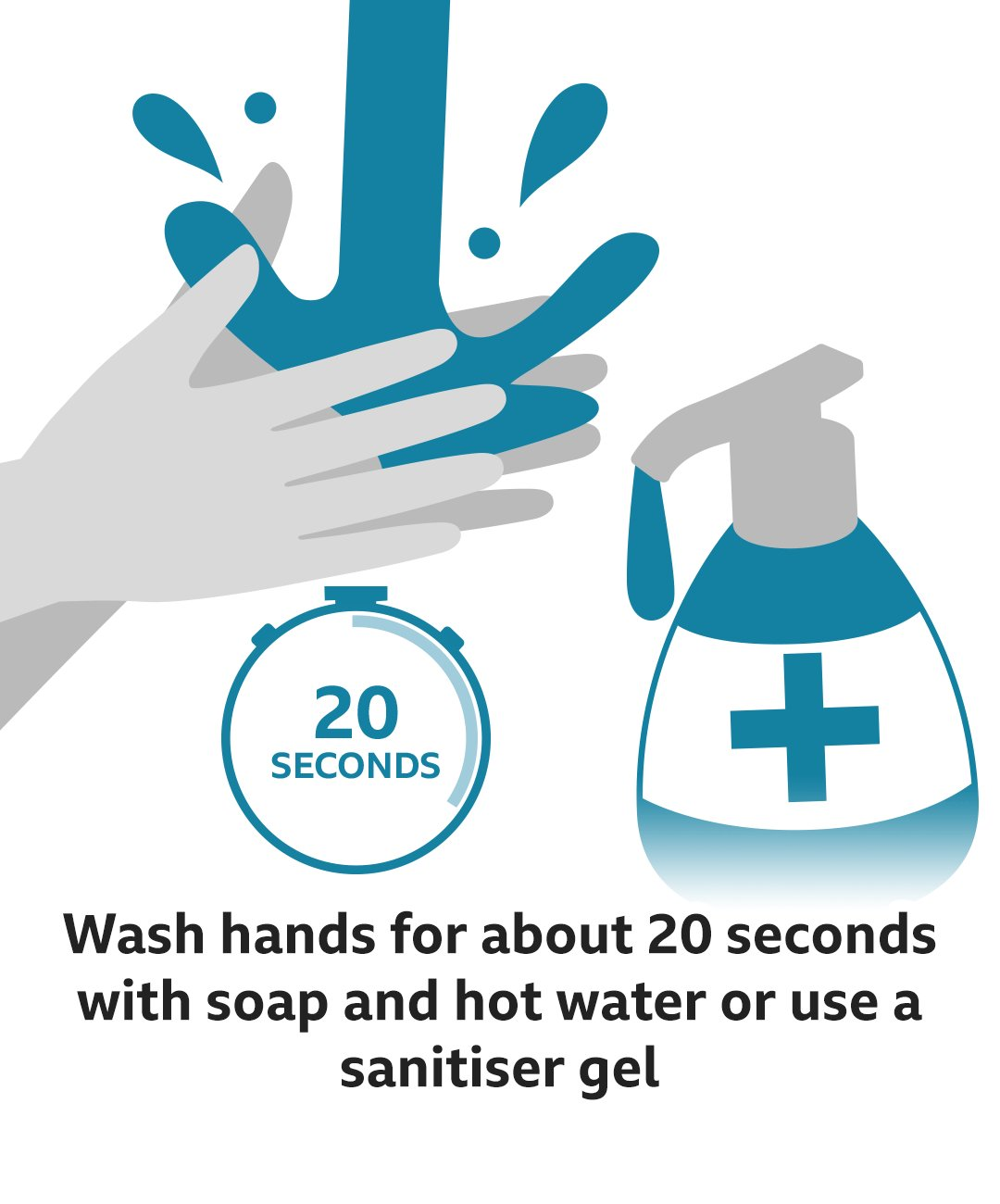
Text reads: Wash hands for about 20 seconds with soap and hot water or use a sanitiser gel

India On Self Quarantine Amidst COVID 19 Pandemic


Shruti Barpande
Docplexus Editorial Team
The coronavirus outbreak, which is now a pandemic, has caused worldwide panic. Countries are ensuring that their citizens are safe and the virus is not spread. On similar fronts, the Indian government has issued an advisory to the Bureau of Immigration to suspend visas. Further, the government has issued guidelines for home quarantine. In lines with the coronavirus outbreak, all the tourist visas to France, Germany, and Spain nationals have been suspended. The suspension will be applicable till 15th April 2020. Who is refrained? The government has strongly advised Indians to refrain from traveling to several countries. Additionally, several foreign nationals who are in India have also been refrained from overseas travel. The individuals whose visa are canceled include – The nationals of France, Germany, and Spain who have been granted a visa on or before 11th March 2020 but have not yet entered India. All foreign nationals who have a travel history of Italy, Iran, South Korea, Japan, and China on or after 1st February 2020. Indian nationals who wish to travel to the above-mentioned countries. Individuals with overseas citizenship of India and visa-free travel facility. Who is exempted from suspension? The individuals who are exempted from the visa suspension include – Foreign nationals who are in India, these individuals can avail of an extension of their visa. Individuals with diplomatic, official, UN/International organizations, employment, and project visa. Quarantine Guidelines In the wake of these happenings, the ministry of health and family welfare has also issued guidelines for home quarantine. The Indian and foreign nationals, including those who are exempted from visa suspension, are advised to undergo self-imposed quarantine for 14 days. The key features of the guidelines are as follows – A minimum of 14-days of quarantine is essential for suspected and infected individuals. Infected individuals should stay in a well-ventilated room with separate toilet and should maintain at least 1m distance from the family members. Infected individuals should stay away from elderly people, pregnant women, children, and people with co-morbidities. Infected individuals should restrict their movements within the house and strictly refrain from attending social gatherings. Every individual in the house should consistently sanitize; avoid sharing utensils, clothes, bed, towels. The infected individual should wear masks that should be changed every 6-8 hours. The disposed masks should be disinfected with 5% ordinary bleach solution or 1% sodium hypochlorite solution. Only assigned individuals should take care of the infected person. Activities like shaking and dusting of solid linen should be strictly avoided. The toilets, frequently touched surfaces, linen, clothes should be cleaned with household bleach while wearing gloves. The practitioners are essential point-of-contacts in this scenario and hold the responsibility of spreading awareness and knowledge or prevention and quarantine guidelines. Sources – Times of India

Read more at: https://www.docplexus.com/#/app/posts/c8a27c43-348e-4925-887c-e91f21542465?utm_term=Email-CORONA-Digest-15Mar20&utm_campaign=Email-Non-Users&utm_medium=Email&utm_source=Docplexus&utm_content=CTA
Copyright 2020 © Docplexus

Coronavirus & Heart Disease: What You Should Know

Patients with pre-existing heart disease are concerned and confused about the potential impact of the coronavirus, known as COVID-19.  Here are some questions I get asked and their answers. The challenge is that there is much about COVID-19 that we do not fully understand just yet.  
Query 1:  What Is A Coronavirus? This name has been around for quite some time. In fact, it is important to understand that there are several strains of coronaviruses that have been identified by researchers over the years. These viruses begin by infecting animals, evolve, mutate, and are eventually transmitted to humans. These viruses are responsible for causing an array of illnesses from a common cold to SARS and MERS (Middle Eastern Respiratory Syndrome)  
Query 2:  What Is COVID-19? COVID-19 is the abbreviated name of this virus which stands for “coronavirus disease 2019”.This is a new, or novel, virus of which we know little about. Corona refers to the crown-like appearance of the virus as seen when magnified. According to the Centers for Disease Control (CDC), the origin of the COVID 19  is from bats. While the initial detection of COVID-19 was in  China, the virus has quickly spread across the globe. COVID-19 spreads from person-to-person through droplets when a person coughs or sneezes close to another person – exactly similar to the common cold.
 Query 3:  What Happens When A Person Becomes Infected With A Coronavirus? Generally speaking, coronaviruses target the respiratory system of their host. These viruses reside within the airway of its host and begin to replicate by injecting their genetic code into host cells. Most of those infected will experience mild-to-moderate symptoms that do not require major medical intervention. Some may have no symptoms. However, in about 20%  there maybe more severe symptoms, organ failure, and death.  
Query 4:  What Are The Risk Factors of COVID-19? Persons aged 60 and over, men, in particular, are more likely to experience severe symptoms and possibly fatal outcomes after contracting COVID-19. Those with pre-existing underlying health conditions, acute or chronic – including heart and lung disease and diabetes - are more likely to develop complications from the virus. Health care workers that care for patients People with an already compromised immune system  
Query 5:  What Are The Symptoms of COVID-19? Symptoms of the virus include fever, dry cough, fatigue, and shortness of breath. There have been reports of muscle aches, sore throat, abdomen discomfort, and nausea.  Query 6:  How Contagious Is COVID-19? It is highly contagious. It is shared between an infected individual and others by close (less than 2 meters) contact via respiratory droplets. These droplets do not stay for long in the air but do survive on surfaces like tabletops, door handles, etc and can be picked up by hands touching the same and then the person touching his/her face, mouth, eyes or nose with the contaminated hands. The incubation period of the virus can be anywhere from 1-21 days.  However, the majority of cases are detected through testing between 2 and 14 days.  Unfortunately, the virus can and often is shared with others before the afflicted are aware of the need to seek testing and treatment. 
Query 7:  Can Coronavirus Infections Be Prevented?  The only way to avoid becoming infected by COVID-19 is to not come in contact with it. Currently, no vaccine or cure is available to combat this coronavirus. Monitoring and supportive care such as oxygen therapy, IV fluids, antiviral medications, and fever reducers are given to patients in a clinical setting. These efforts appear to help boost a person's ability to recover. 
The CDC and WHO have repeatedly stated it is not a matter of 'if' but of 'when' the virus will reach your town. That said, here are some ideas that might help you prevent contact with an infected person: 
 Avoid handshaking – use Namaste, hand wave or Jai Hind. 
Avoid large gatherings as much as possible.   
Be alert to travel restrictions and bans issued by your country's health ministers.  
Look into whether video conferencing is an option where you are employed. 
Besides reporting to the health authorities and quarantine of a potentially infected person, it is recommended that we all follow the same precautionary steps we do for the flu season.
 Avoid contact with those that are infected or have contact with those that are infected.
 Frequently washing your hands with soap and water for 20 seconds will do wonders to keep the virus at bay. It is especially important to wash upon entering your home after being out in the "world", before meals, after using the bathroom and after sneezing, coughing, or blowing your nose.  Soap dissolves the outer oily layer of the virus thus killing it. Washing with just water may not work as the virus can just stick on. Use disposable paper towels to blow your nose into or to sneeze. Dry your hands after washing. Hand sanitizer (over 60% alcohol) can be used as a stand-in for soap and water if none is readily available. Clean and disinfect daily items and areas used frequently. Mucous membranes are ports of entry for this virus. Avoid touching your face, eyes, nose, and mouth. Specific to masks: Wearing a properly fitting mask is mandatory only if you are already infected. However, mask-wearing has not proven to be effective in preventing infection if worn by the uninfected ie the general public. Mass buying and using masks is of no use for normal people  Query 8:  How Does Coronavirus Impact The Heart? A lot of my patients ask  “I have heart disease. Am I more susceptible to contracting this coronavirus?” and “Does COVID-19 impact patients with heart disease differently than people without heart disease?" The coronavirus can impact the heart in several ways. Viruses are known to attack the heart and can cause viral cardiomyopathies in which the pumping chambers of the heart get weak and may fail to pump effectively. The coronavirus per se has been widely used in rabbit models to study cardiomyopathy so it is certainly capable of damaging the pumping chambers of the heart. However, no such specific case has been reported so far. However, patients who have heart valve abnormalities are indeed more susceptible to heart failure if they were to become infected with the coronavirus.  Query 9:  Is It Common For Infected Patients With Heart Disease Patients To Be Hospitalized? The presence of underlying diseases of the heart, lungs, or other major organs predisposes patients to more severe infection and symptoms, as well as increased risk of death. That does not mean people with heart disease are more likely to contract the coronavirus. It just means that those folks are more likely to have complications once they do get it.  Query 10:  Is It Safe To Have Heart Valve Surgery Considering The Spread Of Coronavirus? In my Clinic, one of my patients asked  “You have scheduled my aortic valve replacement in two days. I am concerned about a coronavirus infection during surgery and in the hospital? Should I wait to have my surgery? Is it safe?”  There is absolutely no reason to postpone elective or scheduled surgery. At the same time, it is very important to note that patients should not proceed with surgery if they are experiencing any symptoms related to a potential infection. If you are scheduled for heart valve surgery, or in fact any major procedure, and become ill with a flu-like illness, you should reschedule your surgery if possible. Ideally, you should be fully recovered from any illness before having any elective surgery.  Query 11:  Am I at a higher risk to contract  COVID-19 if I already have had Heart Valve Replacement Surgery?  Again several patient questions about the risks of being infected after heart valve replacement surgery with either a tissue valve or a mechanical valve. People who have already had heart surgery and who are otherwise healthy should have normal immune systems.  So, they should be no more susceptible to complications from a viral infection.  Query 12:  Are Patients With Mitral Valve Repair Rings More Likely To Get Infected With COVID-19?  We now perform more valve-sparing repair procedures which entail using devices called rings. You are  NOT at increased risk for viral infections. Yes - bacterial infections (a bacteria is different from a virus) could damage your repair – hence we do prescribe antibiotics for patients who have an artificial heart valve or ring if they have to undergo any procedure eg tooth surgery.     To summarise – a heart patient is not specifically prone to COVID-19. So – do not panic at all. Just take appropriate general precautions and stay Heart Smart. What precautions would you suggest for preventing coronavirus?
Dr. Harinder Singh Bedi
Director CTVS , Ivy Hospital, Mohali, Punjab

Read more at: https://www.docplexus.com/#/app/posts/71df113f-8f81-488e-89be-470e05c3c98e?utm_term=Email-CORONA-Digest-15Mar20&utm_campaign=Email-Non-Users&utm_medium=Email&utm_source=Docplexus&utm_content=CTA
Copyright 2020 © Docplexus

Resolution on Covid -19 Epidemic

Jan Swasthaya Abhiyyan Haryana adopt the following resolution about Corono Virus emerging epidemics in Haryana  :
1.       Rapidly prepare for a surge in patients requiring healthcare and hospitalization by strengthening the public hospitals. This would require in the least one hospital with an ICU and potential isolation wards and ventilators and oxygen supply in every five to ten lakh population. It would also require corresponding improvement in supply of relevant consumables and deployment of human resource. Hopefully the government containment measures will delay the peak for two to three months- but this time must  be well spent in preparation.  We reiterate that such an expansion was anyway long overdue, and this epidemic is an opportunity to rush such preparation through.
2.       While containment by isolating patients with the disease and tracing contacts, and quarantining individuals returning from nations with an established outbreak may continue to be relevant for one or two more weeks, the system needs to gear up for addressing community transmission.
3.       Social distancing must necessarily be done by public education and persuasion. The use of coercive measures would be unfair and unhelpful. Maintenance of routine economic activity, which primarily to us means the safeguarding of the livelihoods of the majority, must be safeguarded.
4.       Mass gatherings, public events, are it social, religious, sports related, cultural or political, could be dissuaded for some time more- but should not be banned.
5.       The freedom of the media to report on the epidemic must be safeguarded at all times. However when carrying a message that is on the nature of spread, the source of infection or on treatment, new media must be encouraged to keep to government channels, international health institution channels, or of universities and research institutions. Where information is from outside these sources- the news must be accompanied by a disclaimer that this is unverified and could be fake.
6.       There must be an immediate increase in public expenditure that leads to widespread demand side support in the form of both increased public employment and social security support, ensuring a universal basic income.  This is urgently required to address the attack on livelihoods of the majority, that has already been compromised by a decade of economic policies that intensified capital accumulation, but destroyed livelihoods. Further concessions to corporate industry to counter they are also facing, due to a crisis of their making would be most counter-productive.
 Jan Swasthay Abhiyan Haryana 

Friday, 13 March 2020

HARYANA HEALTH SCENARIO

**जन स्वास्थ्य अभियान- विश्व , भारत और हरियाणा में:**
' आल्मा आटा घोषणा 1978 ' में किया गया सभी के लिए स्वास्थ्य का वादा जब सदी के अंत तक पूरा होता नहीं दिख रहा था, तब विश्व भर में स्वास्थ्य के क्षेत्र में काम करने वाले अनेक संगठनों, संस्थाओं व व्यक्तियों ने मिलकर सक्रिय 'पीपुल्स हेल्थ मूवमेंट' (PHM) की शुरुआत की। यह शुरुआत दिसंबर 2000 में बांग्लादेश में आयोजित पहली 'पीपल्स हेल्थ असेंबली ' के साथ हुई जहां 'पीपुल्स हेल्थ मूवमेंट' (PHM) का गठन किया गया। इस आंदोलन ने 'सभी के लिए स्वास्थ्य अभी' के नारे के साथ कमजोर होते सार्वजनिक स्वास्थ्य सेवा तंत्र को मजबूत करने की मांग सामने रखी। आंदोलन में वैश्विक स्वास्थ्य संकट से उबरने के लिए दुनिया के स्तर पर बेहतर स्वास्थ्य स्वास्थ्य नीतियों , स्वास्थ्य सेवाओं तक सबकी पहुंच और स्वास्थ्य के सामाजिक कारको में असमानता के संकट को दूर करने की मांग उठाई ।
'जन स्वास्थ्य अभियान' ' पीपल्स हेल्थ मूवमेंट' का भारतीय अध्याय है जिसमें जमीनी स्तर पर काम करने वाले अलग-अलग जाति,मजहब,जेंडर से जुड़े अनेक सामाजिक संगठन, आंदोलन, संस्थाएं व कार्यकर्ता शामिल हैं । सबका उद्देश्य एक है- 'सभी के लिए स्वास्थ्य अभी'। जन स्वास्थ्य अभियान, अपनी विभिन्न राज्य, क्षेत्रीय व स्थानीय स्तर की समितियों के माध्यम से सरकारी स्वास्थ्य तंत्र को मजबूत करने, दवाइयों की उपलब्धता एवं स्वास्थ्य सेवाओं के हनन के मुद्दों पर काम कर रहा है ताकि स्वास्थ्य और उससे जुड़े लोगों के मुद्दे मुद्दों को उनकी मांगों को मजबूती मिले। जन स्वास्थ्य अभियान, स्वास्थ्य को एक मौलिक अधिकार बनाने के लिए निरंतर आंदोलनरत है, ताकि कोई भी व्यक्ति अपने जीने के संवैधानिक मूलभूत अधिकार से वंचित ना रहे। जन स्वास्थ्य अभियान हरियाणा भी इसी बड़े नेटवर्क का एक हिस्सा है जो हरियाणा के स्तर पर इन्हीं सब मुद्दों व मांगों को लेकर संघर्षरत है।
***हरियाणा की स्वास्थ्य व्यवस्था और जन स्वास्थ्य अभियान की भूमिका:***
पिछले कुछ वर्षों के दौरान हरियाणा में स्वास्थ्य के क्षेत्र में अनेक ढांचागत व नीतिगत बदलाव के साथ-साथ उद्देश्यों के स्तर पर भी बदलाव हुए हैं । पिछली सरकार के कार्यकाल के दौरान तीन नए राजकीय मेडिकल कॉलेज खुले व हुए पीजीआईएमएस रोहतक को हेल्थ यूनिवर्सिटी के तौर पर अपग्रेड किया गया। लेकिन पहले से मौजूद स्वास्थ्य ढांचे की सुध कम ली गई । वो चाहे पीएचसी हों , सीएचसी हों या फिर सामान्य अस्पताल सभी जगह चिकित्सकों ,अन्य स्वास्थ्य कर्मियों जैसे लैब तकनीशियन , फार्मासिस्ट , स्टाफ नर्स इत्यादि की कमी ज्यों की त्यों बनी हुई है । जो स्वास्थ्य कर्मचारी पहले से काम कर रहे हैं , उनके शिक्षण व प्रशिक्षण की हालत भी बहुत अच्छी नहीं है। सभी स्वास्थ्य कर्मचारी सरकार की मौजूदा नीतियों से परेशान हैं। स्वास्थ्य कार्यकर्ताओं जैसे आशा वर्कर्स, आंगनवाड़ी वर्कर आदि की स्थिति भी बाकी कर्मचारियों जैसी ही है । पिछले कुछ वर्षों में इन तमाम तबकों ने अनेक हड़तालें व प्रदर्शन इन्हीं मांगों को लेकर किए हैं । दूसरी ओर मरीजों व बीमारियों की संख्या में लगातार वृद्धि हो रही है , कोई भी बीमारी महामारी का रूप धारण कर लेती है । गर्भवती महिलाओं व छोटी बच्चियों में खून की कमी हरियाणा की पहचान बनी हुई है ।अस्पतालों में दवाइयों की उपलब्धता न के बराबर है। जांच सेवाएं उपलब्ध कराने के नाम पर निजी कंपनी को पीपीपी के ठेके दिए गए हैं। इससे लोगों के एक तबके को कुछ राहत तो मिली है लेकिन निजीकरण की मुहिम ज्यादा तेज हो गई है । राष्ट्रीय स्वास्थ्य बीमा योजना भी पिछले करीब 4 साल से बजट उपलब्धता के बावजूद ठप्प पड़ी है । स्वास्थ्य सेवाओं में सुधार और विकास के नाम पर सिर्फ बड़ी-बड़ी बिल्डिंग ही बनी हैं । यह सारी परिस्थितियां स्वास्थ्य ढांचे व सेवाओं के प्रति सरकार की उदासीनता को ही दर्शाती हैं ।
एक तरफ जहां सार्वजनिक स्वास्थ्य ढांचा लोगों की स्वास्थ्य संबंधी जरूरतों को संबोधित करने में नाकाफी सिद्ध हो रहा है वहीं दूसरी तरफ स्वास्थ्य के साथ-साथ दूसरे सामाजिक क्षेत्र जैसे शिक्षा आदि के क्षेत्र में भीसार्वजनिक निवेश नियमित रूप से साल दर साल कम होता जा रहा है ।जरूरी हो जाता है कि स्वास्थ्य तंत्र को मजबूत करने के लिए और सार्वजनिक सेवाओं के तेजी से हो रही निजीकरण के खिलाफ लोग अपनी आवाज बुलंद करें । यह सब चुनौतियां जन स्वास्थ्य अभियान हरयाणा की भूमिका को अहम बना रही हैं ।
कुछ मुख्य मुद्दे:
1.सार्वजनिक स्वास्थ्य तंत्र का सशक्तिकरण
2 . निजीकरण और स्वास्थ्य सेवाएं
3 . जेंडर और स्वास्थ्य
4 . दवाइयों और जांच सेवाओं की उपलब्धता
5 . स्वास्थ्य के सामाजिक कारक
जन स्वास्थ्य अभियान हरियाणा ।

Hisar Health Scenario
*187 sanctioned posts of medical officers
*89 posts filled
*98 vacant in the district
*Of 55 sanctioned posts medical officer in Hisar Civil Hospital, 16 are vacant.
* Just one of the 11 posts is filled in Barwala CHC
*Sisai CHC too has just one MO.
** Lacks ventilator facilities.
**Ultrasound facility has not been available for 4 months.
** Specialists posts of radiologist, burn specialist,onco specialist,neurosurgeon,and gastroenterologist are lying vacant.
** Space problem is there because of which infrastructure cannot be expanded .
Saurce Dainik Tribune , 26 Nov.2019
Jan Swasthya Abhiyan Haryana

In CM's dist,Karnal hospitals make do with half doctor strength
Health institutions in Karnal
1 Civil Hospital
2 Subdivisional hospitals
5 CHCs
14 PHCs
3 Dispensaries
1 in jail
1 Polyclinic
Sanctioned posts of doctors 154
Vacancies 87
Health Centres without doctors:
Taraori
Uplana
Padhana
Samana bahu
Gularpur
Padha
Gagsina
Gudha
Kunj pura
Ramba
Mirghan
Biana
Postpartam unit of Civil Hospital
Civil Hospital has 42 sanctioned posts
Only 22 doctors are there
Nilokheri subdivisional hospital four of the 11 posts are vacant.
In Gharaunda 5 of the 6 sanctioned posts are vacant.
Source (The Tribune, dated 25 Nov.2019)
As per the central govt. recommendations there should be a surgeon, physician, paediatrician and gynecologist in each CHC.
One Chawla Medical College is there
Another Health University is also being planned.
One Medical College at each district level is promised .
The primary and secondary level health services are collapsing because of wrong policies of the successive Govts.
Jan Swasthya Abhiyan Haryana


ये आंकड़े बहुत कुछ कह रहे हैं
सिविल अस्पताल फरीदाबाद
1.डॉक्टर--63%
2.ओपीडी --2200 के लगभग मरीज रोजाना आते हैं ।
3.90 नर्सिस की पोस्ट हैं जिनमें से 24 कार्यरत हैं।
4.पैथोलोजिस्ट नहीं है
5.एक रेडियोलाजिस्ट जो 40 से 50 मरीजों को देखता है। इसके इलावा मेडिकोलीगल केस और दूसरे काम।
6. 2 पोस्ट Dietician की खाली पड़ी हैं
7.14 लेबोरेटरी असिस्टेंट की पोस्ट कार्यरत हैं 5।
8.आपरेशन थिएटर असिस्टेंट की 10 पोस्ट हैं कार्यरत हैं 3।
9.ECG टेक्नीशियन की 3 पोस्ट हैं कार्यरत सिर्फ 1 है।
Source: The Tribune, 15 july, 2019


सिरसा :आयुष्मान भारत
जिले के 82 हजार परिवार शामिल हैं। 11 बड़े प्राइवेट और 4 सरकारी अस्पतालों को पैनल में लिया है जबकि 20 प्राइवेट अस्पतालों आवेदन किया था। 5000 पात्रों ने कार्ड बनवाए हैं। 51 मरीजों ने पैनल में शामिल विभिन्न अस्पतालों से इलाज लिया है । 14 मरीजों का इलाज सरकारी अस्पताल में संभव हो पाया है । यहां सभी में इलाज शुरू हो चुका है।
सोनीपत :आयुष्मान भारत
20 निजी अस्पताल पैनल से जुड़े हैं, जबकि छह की फाइल पेंडिंग है । यहां गोल्डन कार्ड 80000 के बनने हैं जबकि बने सिर्फ 6500 के हैं । गोल्डन कार्ड के लिए भी लाइन लग रही है। काउंटर नहीं बढ़ाए गए । अब तक 65 मरीजों की सर्जरी व फिजिशियन से जांच हुई है।
जींद:आयुष्मान भारत
जिले में अभी तक किसी भी निजी अस्पताल में लाभ पात्र का इलाज नहीं हो पाया है । यहां से 9 अस्पतालों ने आवेदन किया था लेकिन 5 को ही लॉगइन मिला है । जो लाभपात्र पहुंचे उनका सिविल अस्पताल में ही इलाज किया जाता है नहीं तो पीजीआई रेफर किया जाता है । सिविल अस्पताल में 27 लाभ पात्र का इलाज हुआ है।
नारनौल :आयुष्मान भारत
यहां 44000 परिवारों को आयुष्मान भारत योजना में शामिल किया है । इसके तहत जिले के छह अस्पतालों को शामिल किया है। इसमें चार निजी और दो सरकारी अस्पताल शामिल हैं। यहां इनमें पात्र लोगों का निशुल्क इलाज शुरू हो चुका है । बता दें कि 10 से अधिक निजी अस्पतालों ने योजना के लिए आवेदन किया था लेकिन 6 ने शर्तें पूरी नहीं की।
आयुष्मान भारत योजना:
250 प्रकार के इलाज सिर्फ सरकारी अस्पताल में मरीज ले सकते हैं ।
योजना में यहां आ रही परेशानी :
** 276 बीमारियों को रिजर्व पैकेज में शामिल किया है। यानी जो बीमारियां रिजर्व पैकेज में शामिल हैं बीमारियां रिजर्व पैकेज में शामिल हैं उनका इलाज सरकारी अस्पताल में होगा । इस कारण कोई खास फायदा नहीं हो रहा है । इन बीमारियों का इलाज निजी अस्पतालों में नहीं है।
** सोनीपत के 3 बड़े निजी अस्पतालों ने योजना से जुड़ने से किनारा कर लिया है । कारण इन अस्पताल के मालिकों को सर्जरी केे रेट काफी कम लगे ।
** निजी अस्पतालों को गोल्डन कार्ड बनाने की ट्रेनिंग पूरी तरह से नहीं दी गई। अस्पताल संचालकों का कहना है कि सरकार के नियम काफी सख्त व ज्यादा हैं। पेमेंट के लिए डेढ़ से 2 महीने तक इंतजार करना पड़ रहा है । कई बार जो रिपोर्ट और पैकेज बनाकर भेज देते हैं, वह रिजेक्ट हो जाते हैं ।
** गाल ब्लैडर समेत रूटीन के ऑपरेशन के लिए निजी अस्पतालों को योजना के तहत अधिकृत नहीं किया है। लोग आकर कहते हैं कि 500000 तक सभी इलाज निशुल्क हैं ।
** सरकारी अस्पतालों में होने वाले ट्रीटमेंट को प्राइवेट अस्पतालों में शामिल नहीं किया है । इसके अलावा जो ट्रीटमेंट प्राइवेट अस्पतालों में होता है उसे सरकारी अस्पतालों में शामिल नहीं किया गया।
** स्वास्थ्य विभाग ने प्रचार तक नहीं किया कि कौन कौन सा इलाज सरकारी और निजी अस्पतालों में कैशलेस मिलेगा
**आईएमए का कहना है कि अभी तक उनके पास इलाज के लिए मरीज नहीं पहुंच रहे हैं । इसका बड़ा कारण योजना में बीमारियों के रिजर्व पैकेज का किया किया गया प्रावधान है । गंभीर बीमारी का इलाज किस अस्पताल में होगा यह क्लियर नहीं । कॉरपोरेट अस्पतालों में तो स्टाफ हैं ,छोटे अस्पतालों के डॉक्टरों को क्लर्की करनी होगी । जिस अस्पताल में भोजन की व्यवस्था नहीं है वहां परेशानी है । इलाज के पैकेज में सब कुछ करना है जो संभव नहीं

आयुष्मान भारत योजना :
रियलिटी रिपोर्ट :
दैनिक भास्कर 28 जनवरी 2019
250 प्रकार के इलाज सिर्फ सरकारी अस्पताल में मरीज ले सकते हैं। जरूरतमंद मरीजों का ₹500000 तक का बड़े अस्पतालों में बेहतर इलाज के लिए आयुष्मान भारत योजना को प्रधानमंत्री नरेंद्र मोदी ने लांच किया था। हकीकत में निजी अस्पतालों में मरीजों का इलाज सही ढंग से शुरू नहीं हो सका है । ज्यादातर लोगों को पता नहीं कि किस बीमारी का इलाज निजी अस्पताल में होगा और किसका सरकारी में । इसके चलते प्रदेश के जरूरतमंद लोग धक्के खा रहे हैं । प्रदेश में ऐसे अनेक केस सामने आए हैं जिनमें पता चला है कि लोगों को निजी अस्पतालों में परेशान होना पड़ रहा है । मरीजों का कहना है कि वह निजी अस्पतालों में इलाज के लिए जाते हैं तो लौटा दिया जाता है। मरीजों की शिकायत पर भास्कर ने गत दिनों निजी अस्पतालों में योजना की पड़ताल की । पता चला कि कुछ बड़े निजी अस्पताल को छोड़कर अन्य अस्पतालों में आयुष्मान भारत चालू नहीं हुई है । वहीं, जितने अस्पतालों ने आवेदन किया था उनमें खामियों के चलते अनेक को अप्रूवल नहीं दी गई है। 1370 तरह के मुफ्त इलाज का लाभ पैनल में शामिल प्राइवेट अस्पतालों से मरीज ले सकते हैं ,जबकि 250 प्रकार के इलाज सिर्फ सरकारी अस्पताल में मरीज करा सकते हैं । निजी अस्पतालों के डॉक्टरों का मानना है कि पेमेंट के लिए डेढ़ से 2 महीने तक इंतजार करना पड़ रहा है । वहीं योजना के जिला मैनेजर का सोहन क् कहना है कि पेमेंट 15 दिन में हो जाती है । अगर फिर भी किसी अस्पताल की रूकती है तो उसमें या तो कोई गलत पैकेज सेलेक्ट किया गया होता है या फिर डॉक्यूमेंट गलत हो सकते हैं।

Swasth Report Of Haryana: The State Lags Behind Despite A Drop In Malnutrition, As Anaemia And Diarrhoea Cases Rise

Haryana was named as one of the best incremental performing states in Niti Aayog’s Health index report however the state’s performance in National Health and Family Survey 4 shows that it needs to work on bringing down instances of Anaemia and Diarrhoea cases

Haryana, Swasth India, Swasth Report Cards
     
 0
 
New Delhi: The northern state of Haryana was named as one of the three states to top the incremental performance, in the second edition of the central government’s think-tank Niti Aayog’s health index report. The report, titled ‘Healthy States, Progressive India – 2017-18’, looked at the overall performance and incremental improvement in the states and Union Territories from 2015-16 (base year) to 2017-18 (reference year) on 23 health indicators. Haryana was evaluated in the category of 21 larger states. Haryana’s overall performance index score increased from 46.97 to 53.51, an increase of 6.55 points, which is the highest in India, but its overall rank is 12 which was 13 earlier.

Here’s a look at Swasth Report of Haryana and its performance on health parameters:

  1. Infant Mortality Rate (IMR): The infant mortality rate in Haryana, according to National Family Health Survey (NFHS) 4 — per 1,000 live births was down by 21.42 per cent, from 42 per 1000 live births in NFHS-3 (2005-2006) to 33 per live births in NFHS-4 (2015-2016). This reduction in infant mortality rates in Haryana is less than the 28 percent reduction seen at an all India level.
  2. Under-Five Mortality Rate (U5MR): In NFHS 4, Haryana’s under-five mortality rate (U5MR) (children dying under the age of five) stood at 41 per 1000 live births, down from 52 per 1000 live birth (NFHS 3, 2005-06), which is about 21.1 per cent improvement. While in the same period at an all India level reduction in under-five mortality rate saw a drop of 32.4 percent.
    Haryana's Infant mortality and under five mortality status
    Haryana’s Infant mortality and under five mortality status
  3. Malnutrition: At an all India level, while stunting (low height-for-age) came down by 38.4 percent between 2005 and 2015, according to NFHS 4, Haryana saw a drop of just 11.7 per cent from 45.7 per cent in the year 2005-06 to 34 per cent in 2015-16.
    The state has also witnessed a 10.1 per cent decline in the cases of children under 5 years who are underweight, from 39.6 per cent (2005-06) to 29.4 per cent (2015-16), as per the NFHS 3 and 4, respectively. This is more than what overall country managed with just 6.7 percent reduction in cases of underweight children from 42.5 per cent (2005-06) to 35.8 per cent (2015-16). In terms of wasting (low weight-for-height), Haryana showed a minor increase of 2.1 per cent, which is slightly more than the 1.2 percent increase seen at an all India level.
    Haryana's malnutrition status
    Haryana’s malnutrition status
  4. Anaemia Among Children And Women: Haryana saw a negligible drop of 0.6 per cent in Anaemia cases for children from 72.3 percent IN 2005-06 to 71.7 per cent. When it comes to anameia among women aged 15-49, the state saw a rise of 6.6 percent from 56.1 per cent to 62.7 per cent in the same period. This is contrast to the overall country’s performance which saw drop in anaemia cases of 10.8 per cent among children and 2.2 per cent among women, as per NFHS 4 survey.
    Status of Anaemia in Haryana among children and women
    Status of Anaemia in Haryana among children and women

Diarrhoea Cases And Death: According to National Health Profile 2018 report, Diarrhoeal deaths in Haryana in 2016 stood at 14 and it rose slightly in 2017 to 20. Moreover, out of the total 1.3 crore cases (12,927,212) of Diarrhoea in India, Haryana contributed 1.83 per cent with 2,36,752 diarrhoea cases in 2017 as compared to 2,24,780 in 2016.
Cases of Diarrhoea and Diarrhoeal deaths in Haryana


****जन स्वास्थ्य अभियान हरियाणा ****


स्वास्थ्य एक मौलिक अधिकार होना चाहिए , और यह कोई नई मांग या नया सिद्धांत नहीं है । 'सबके लिए स्वास्थ्य' की मांग को लेकर दुनिया भर में अनेक आंदोलन और अभियान होते रहे हैं । इन्हीं तमाम अभियानों की वजह से '1978 में हुई आल्मा आटा उद्घोषणा एक मील का पत्थर साबित हुई है। आल्मा आटा उद्घोषणा को हुए 40 वर्ष पूरे हो गए हैं लेकिन आज भी दुनिया की बड़ी आबादी वैश्विक स्वास्थ्य संकट से जूझ रही है । आज भी स्वास्थ्य के सामाजिक कारकों मसलन साफ हवा , साफ पानी, पोषक आहार जैसी चीजों व स्वास्थ्य सेवाओं तक सब की पहुंच नहीं है । सभी स्तरों पर भारी असमानताएं हैं और ये पिछले कुछ वर्षों में तेजी से बढ़ी हैं।
*** भारत की स्वास्थ्य व्यवस्था :एक पृष्ठभूमि ***
भारत में सरकारी स्वास्थ्य तंत्र को दिन प्रतिदिन कमजोर किया जा रहा है। अपर्याप्त बजट आबंटन की वजह से स्वास्थ्य सेवाओं की उपलब्धता व गुणवत्ता लगातार गिरती जा रही है। आम लोगों की जेब से स्वास्थ्य सेवाओं पर होने वाला खर्च भी बढ़ता जा रहा है। वहीं दूसरी और व्यवसायिक निजी क्षेत्र तेजी से प्रगति कर रहा है। हम जानते हैं कि निजी क्षेत्र के लिए यह एक व्यापारिक गतिविधि मात्र है जिसका एकमात्र उद्देश्य सिर्फ मुनाफा कमाना है । जन स्वास्थ्य और लोक कल्याण से इनका कोई लेना देना नहीं है। आजादी के 71 साल के बाद भी हमारी सरकार ने अपने नागरिकों को वहनीय स्वास्थ्य सेवाएं उपलब्ध कराने में नाकाम रही है। भारतीय संविधान के नीति निर्देशक सिद्धांत भारत सरकार को यह जिम्मेदारी देते हैं कि वह इस देश के सभी नागरिकों को सार्वभौमिक स्वास्थ्य सेवाएं उपलब्ध करवाए । भोरे कमेटी की रिपोर्ट में भी वर्ष 1960 तक सभी लोगों तक सार्वभौमिक स्वास्थ्य सेवाएं पहुंचाने का उद्देश्य दिया गया था । यह उद्देश्य आज तक पूरा नहीं हो पाया है। 'आल्मा आटा डेकोरेशन- 1978' में वर्ष 2000 तक 'सभी के लिए स्वास्थ्य ' के लक्ष्य के बाद देश में एक दौर वह भी आया जब इस मुद्दे को गंभीरता से लिया गया और इसे 1983 की राष्ट्रीय स्वास्थ्य नीति में भी शामिल किया गया । परंतु 10 साल के अंदर ही सभी को व्यापक प्राथमिक स्वास्थ्य सेवाएं उपलब्ध कराने के लिए प्रतिबद्धता और गंभीरता चुनिंदा स्वास्थ्य सेवाओं मसलन परिवार नियोजन व मलेरिया रोकथाम के कार्यक्रम तक ही सिमट गई । प्रजनन स्वास्थ्य के नाम पर भी केवल गर्भावस्था के दौरान देखभाल और बाल टीकाकरण जैसी सेवाओं पर ही थोड़ा बहुत ध्यान दिया गया। 90 के दशक के दौरान बजट आवंटन व मानव संसाधन विकास और नियुक्तियों में कटौती के द्वारा सुनियोजित ढंग से सार्वजनिक स्वास्थ्य के ढांचे को कमजोर किया गया। यही वह दौर है जब देश में जहां निजी स्वास्थ्य क्षेत्र फल फूल रहा था और दूसरी तरफ आम आदमी की जेब से स्वास्थ्य सुविधाओं पर होने वाले खर्चों में अभूतपूर्व वृद्धि हो रही थी। 2004 के चुनाव प्रांत केंद्र में बनी नई सरकार यूपीए 1 से लोगों के लिए कल्याणकारी योजनाएं चलाने की उम्मीद बंधी थी । इसी कड़ी में राष्ट्रीय ग्रामीण स्वास्थ्य मिशन की शुरुआत भी हुई इस मिशन के अंतर्गत स्वास्थ्य क्षेत्र में सार्वजनिक निवेश बढ़ाते हुए नए सिरे से सभी लोगों तक संपूर्ण प्राथमिक स्वास्थ्य सेवाएं पहुंचाने व सार्वजनिक स्वास्थ्य ढांचे को मजबूत करने के उद्देश्य पर बल दिया गया। लेकिन साल दर साल घटता स्वास्थ्य बजट व प्रशासनिक कमियों और निजी स्वास्थ्य सेवाओं को बढ़ावा देने वाली आर्थिक नीतियों की वजह से राष्ट्रीय ग्रामीण स्वास्थ्य मिशन अपना निर्धारित लक्ष्य प्राप्त करने में असफल रहा । सार्वभौमिक स्वास्थ्य सेवाओं के नाम पर सरकारी पैसे आउट सोर्सिंग, बीमा योजनाएं व पब्लिक प्राइवेट पार्टनरशिप के माध्यम से निजी क्षेत्र को दिया जाता रहा , जिससे सार्वजनिक स्वास्थ्य ढांचा कमजोर होता चला गया। शायद भारत दुनिया का एकमात्र ऐसा देश है जहां बड़े पैमाने पर स्वास्थ्य सेवाओं का निजीकरण हुआ है।
पिछले 20 सालों का अनुभव बताता है कि 'पब्लिक प्राइवेट पार्टनरशिप' ने ना केवल सार्वजनिक स्वास्थ्य सेवा प्रणाली को कमजोर किया है पर बल्कि निजी स्वास्थ्य क्षेत्र को बढ़ावा दिया है। इस बात को समझना बहुत जरूरी है कि निजीकरण कोई हल नहीं बल्कि एक मुख्य समस्या है ।
भारत में स्वास्थ्य पर होने वाले खर्च में 80% खर्च लोगों द्वारा अपनी जेब से किया जाता है। कितनी ही रिपोर्ट इस बात को साबित करती हैं कि हमारी आबादी का बड़ा हिस्सा वंचित और गरीब तबका सिर्फ स्वास्थ्य सेवाओं पर होने वाले खर्च की वजह से ही गरीबी रेखा से नीचे पहुंच जाता है । हमारे नीति निर्माताओं(जिनका झुकाव निजी स्वास्थ्य सेवाओं को बढ़ावा देने पर ही रहता है) को समझने की जरूरत है कि वह निजी क्षेत्र का मुख्य उद्देश्य सिर्फ मुनाफा कमाना है उसके माध्यम से स्वास्थ्य संबंधित समस्याओं का हल नहीं हो सकता । दुनिया भर के शोध यह बताते हैं कि स्वास्थ्य में निजीकरण और पब्लिक प्राइवेट पार्टनरशिप के प्रयास यहां तक कि अमरीका में भी सफल नहीं हुए हैं।
***राष्ट्रीय स्वास्थ्य नीति 2017 निजी क्षेत्र को और अधिक प्रोत्साहन ***
राष्ट्रीय स्वास्थ्य नीति- 2017, स्वास्थ्य में निजी क्षेत्र की भागीदारी पर जोर देती है। यह नीति 'स्ट्रैटेजिक पर्चेजिंग' के दृष्टिकोण पर आधारित है जो उनके हिसाब से सार्वजनिक सेवाओं को प्राथमिकता देती है। लेकिन इसी दस्तावेज में जब क्रियान्वन की प्रक्रिया की बात आती है तो सारे प्रयास सरकारी स्वास्थ्य संस्थानों को बेकार साबित करके निजी खिलाड़ियों को ही अवसर प्रदान करने के दिखाई देते हैं। हाल ही में आरंभ हुई 'नेशनल हेल्थ प्रोटेक्शन स्कीम ' (एनएचपीएस) का उद्देश्य सार्वजनिक निवेश के माध्यम से आधी आबादी को स्वास्थ्य बीमा सेवा उपलब्ध कराना है। मीडिया में इसे ' यूनिवर्सल हेल्थ कवरेज' (UHC) के लिए योजना के रूप में प्रचारित किया जा रहा है। परन्तु यह योजना ' यूनिवर्सल हेल्थ केयर ' की राजकीय जिम्मेदारी को सिर्फ स्वास्थ्य बीमा तक ही सीमित करती है, और वह भी केवल देश की कुछ प्रतिशत आबादी के लिए। निजी स्वास्थ्य बीमा कंपनियां और अस्पताल सब 'एनएचपीएस' से सिर्फ भारी फायदे की ही की उम्मीद कर रहे हैं ।
दूसरी तरफ स्वास्थ्य नीति समुदाय द्वारा लम्बे समय से की जा रही सर्वसमावेशी स्वास्थ्य प्रावधानों की मांग के आधार पर , सरकार ने 'सर्व समावेशी प्राथमिक स्वास्थ्य सेवा'( कंप्रिहेंसिव प्राइमरी हेल्थ केयर- सीपीएचसी) प्रोग्राम लांच किया है । इस कार्यक्रम के द्वारा मौजूदा 1.5 लाख उपस्वास्थ्य केंद्रों और सभी प्राथमिक स्वास्थ्य केंद्रों को मजबूत कर उन्हें 'हेल्थ एंड वेलफेयर सेंटर' में बदल कर उनके माध्यम से लोगों को तमाम स्वास्थ्य सेवाएं उपलब्ध कराने की योजना है । हालांकि, इसके सफल क्रियान्वन के लिए बजट आबंटन में स्वास्थ्य कर्मचारियों की भर्ती व उनके प्रशिक्षण की उचित व्यवस्था के साथ-साथ स्वास्थ्य ढांचे को भी मजबूत करने की जरूरत है ।
**जन स्वास्थ्य अभियान- विश्व , भारत और हरियाणा में:**
' आल्मा आटा घोषणा 1978 ' में किया गया सभी के लिए स्वास्थ्य का वादा जब सदी के अंत तक पूरा होता नहीं दिख रहा था, तब विश्व भर में स्वास्थ्य के क्षेत्र में काम करने वाले अनेक संगठनों, संस्थाओं व व्यक्तियों ने मिलकर सक्रिय 'पीपुल्स हेल्थ मूवमेंट' (PHM) की शुरुआत की। यह शुरुआत दिसंबर 2000 में बांग्लादेश में आयोजित पहली 'पीपल्स हेल्थ असेंबली ' के साथ हुई जहां 'पीपुल्स हेल्थ मूवमेंट' (PHM) का गठन किया गया। इस आंदोलन ने 'सभी के लिए स्वास्थ्य अभी' के नारे के साथ कमजोर होते सार्वजनिक स्वास्थ्य सेवा तंत्र को मजबूत करने की मांग सामने रखी। आंदोलन में वैश्विक स्वास्थ्य संकट से उबरने के लिए दुनिया के स्तर पर बेहतर स्वास्थ्य स्वास्थ्य नीतियों , स्वास्थ्य सेवाओं तक सबकी पहुंच और स्वास्थ्य के सामाजिक कारको में असमानता के संकट को दूर करने की मांग उठाई ।
'जन स्वास्थ्य अभियान' ' पीपल्स हेल्थ मूवमेंट' का भारतीय अध्याय है जिसमें जमीनी स्तर पर काम करने वाले अलग-अलग जाति,मजहब,जेंडर से जुड़े अनेक सामाजिक संगठन, आंदोलन, संस्थाएं व कार्यकर्ता शामिल हैं । सबका उद्देश्य एक है- 'सभी के लिए स्वास्थ्य अभी'। जन स्वास्थ्य अभियान, अपनी विभिन्न राज्य, क्षेत्रीय व स्थानीय स्तर की समितियों के माध्यम से सरकारी स्वास्थ्य तंत्र को मजबूत करने, दवाइयों की उपलब्धता एवं स्वास्थ्य सेवाओं के हनन के मुद्दों पर काम कर रहा है ताकि स्वास्थ्य और उससे जुड़े लोगों के मुद्दे मुद्दों को उनकी मांगों को मजबूती मिले। जन स्वास्थ्य अभियान, स्वास्थ्य को एक मौलिक अधिकार बनाने के लिए निरंतर आंदोलनरत है, ताकि कोई भी व्यक्ति अपने जीने के संवैधानिक मूलभूत अधिकार से वंचित ना रहे। जन स्वास्थ्य अभियान हरियाणा भी इसी बड़े नेटवर्क का एक हिस्सा है जो हरियाणा के स्तर पर इन्हीं सब मुद्दों व मांगों को लेकर संघर्षरत है।
***हरियाणा की स्वास्थ्य व्यवस्था और जन स्वास्थ्य अभियान की भूमिका:***
पिछले कुछ वर्षों के दौरान हरियाणा में स्वास्थ्य के क्षेत्र में अनेक ढांचागत व नीतिगत बदलाव के साथ-साथ उद्देश्यों के स्तर पर भी बदलाव हुए हैं । पिछली सरकार के कार्यकाल के दौरान तीन नए राजकीय मेडिकल कॉलेज खुले व हुए पीजीआईएमएस रोहतक को हेल्थ यूनिवर्सिटी के तौर पर अपग्रेड किया गया। लेकिन पहले से मौजूद स्वास्थ्य ढांचे की सुध कम ली गई । वो चाहे पीएचसी हों , सीएचसी हों या फिर सामान्य अस्पताल सभी जगह चिकित्सकों ,अन्य स्वास्थ्य कर्मियों जैसे लैब तकनीशियन , फार्मासिस्ट , स्टाफ नर्स इत्यादि की कमी ज्यों की त्यों बनी हुई है । जो स्वास्थ्य कर्मचारी पहले से काम कर रहे हैं , उनके शिक्षण व प्रशिक्षण की हालत भी बहुत अच्छी नहीं है। सभी स्वास्थ्य कर्मचारी सरकार की मौजूदा नीतियों से परेशान हैं। स्वास्थ्य कार्यकर्ताओं जैसे आशा वर्कर्स, आंगनवाड़ी वर्कर आदि की स्थिति भी बाकी कर्मचारियों जैसी ही है । पिछले कुछ वर्षों में इन तमाम तबकों ने अनेक हड़तालें व प्रदर्शन इन्हीं मांगों को लेकर किए हैं । दूसरी ओर मरीजों व बीमारियों की संख्या में लगातार वृद्धि हो रही है , कोई भी बीमारी महामारी का रूप धारण कर लेती है । गर्भवती महिलाओं व छोटी बच्चियों में खून की कमी हरियाणा की पहचान बनी हुई है ।अस्पतालों में दवाइयों की उपलब्धता न के बराबर है। जांच सेवाएं उपलब्ध कराने के नाम पर निजी कंपनी को पीपीपी के ठेके दिए गए हैं। इससे लोगों के एक तबके को कुछ राहत तो मिली है लेकिन निजीकरण की मुहिम ज्यादा तेज हो गई है । राष्ट्रीय स्वास्थ्य बीमा योजना भी पिछले करीब 4 साल से बजट उपलब्धता के बावजूद ठप्प पड़ी है । स्वास्थ्य सेवाओं में सुधार और विकास के नाम पर सिर्फ बड़ी-बड़ी बिल्डिंग ही बनी हैं । यह सारी परिस्थितियां स्वास्थ्य ढांचे व सेवाओं के प्रति सरकार की उदासीनता को ही दर्शाती हैं ।
एक तरफ जहां सार्वजनिक स्वास्थ्य ढांचा लोगों की स्वास्थ्य संबंधी जरूरतों को संबोधित करने में नाकाफी सिद्ध हो रहा है वहीं दूसरी तरफ स्वास्थ्य के साथ-साथ दूसरे सामाजिक क्षेत्र जैसे शिक्षा आदि के क्षेत्र में भीसार्वजनिक निवेश नियमित रूप से साल दर साल कम होता जा रहा है ।जरूरी हो जाता है कि स्वास्थ्य तंत्र को मजबूत करने के लिए और सार्वजनिक सेवाओं के तेजी से हो रही निजीकरण के खिलाफ लोग अपनी आवाज बुलंद करें । यह सब चुनौतियां जन स्वास्थ्य अभियान हरयाणा की भूमिका को अहम बना रही हैं ।
कुछ मुख्य मुद्दे:
1.सार्वजनिक स्वास्थ्य तंत्र का सशक्तिकरण
2 . निजीकरण और स्वास्थ्य सेवाएं
3 . जेंडर और स्वास्थ्य
4 . दवाइयों और जांच सेवाओं की उपलब्धता
5 . स्वास्थ्य के सामाजिक कारक
जन स्वास्थ्य अभियान हरियाणा ।

आइए जानें मासिक धर्म के बारे में


महिलाओं और बालिकाओं के स्वस्थ जीवन को सुनिश्चित करने के लिए मासिक
धर्म संबंधी आस-पास के रहस्यों को उद्घाटित करना आवश्यक है। उनका ज्ञानवर्धन
करना और सुरक्षित मासिक धर्म स्वच्छता के बारे में जागरूक करना अनिवार्य है।
माहवारी एक सामान्य जैविक प्रक्रिया है और प्रजनन स्वास्थ्य का एक महत्वपूर्ण संकेत है, फिर भी कई संस्कृतियों में इसे नकारात्मक, शर्मनाक या गंदा माना जाता है। मासिक धर्म पर निरंतर चुप्पी, तथा परिवार एवं
स्कूल में सीमित एवं उचित जानकारी के अभाव में लाखों महिलाओं और लड़कियों को इस बात की बहुत कम जानकारी होती है कि मासिक धर्म के दौरान उनके शरीर में क्या होता है और इससे कैसे निपटना चाहिए। यूनिसेफ के एक अध्ययन से पता चला है कि दक्षिण एशिया की 3 में से 1 लड़की को मासिक धर्म आने से पहले इसके बारे में कुछ भी पूर्वज्ञान नहीं था, जबकि ईरान में 48 प्रतिशत और भारत में 10 प्रतिशत लड़कियों का
मानना है कि मासिक धर्म एक बीमारी है ;ॅंजमत पक 2013ए डमदेजतनंस भ्लहपमदम डंजजमतेद्ध।
वाटर एड एक अंतर्राष्ट्रीय गैर-लाभकारी संगठन है, जिसे 1981 में संयुक्त राष्ट्र अंतर्राष्ट्रीय पेयजल और स्वच्छता दशक ;1981-1990द्ध की प्रतिक्रिया के रूप में स्थापित किया गया था। आज भी भारत और दक्षिण एशिया के
कुछ हिस्सों में ऐसे परिवार हैं, जहाँ मासिक धर्म वाली महिला के साथ बहुत अपमानजनक तरीके से व्यवहार किया जाता हैं और घर या सामाजिक कार्यों में उसकी उपस्थिति को अशुभ माना जाता है। ऐसा क्यों है कि घर की महिला या बेटी, जो महीने के अन्य दिनों में घर का सारा काम करती है, लेकिन जब मासिक धर्म होता है तो अचानक प्रदूषित हो जाती है? मासिक धर्म वाली महिलाओं को मंदिरों में प्रवेश की अनुमति क्यों नहीं है?
दुकानदार से सैनिटरी नैपकिन खरीदते समय हमें शर्मिंदगी क्यों महसूस होती है? दुकानदार सैनिटरी नैपकिन को ग्राहकों को सौंपने से पहले कागज या काले पॉलीबैग में क्यों लपेटता हैं?
हम अपने शरीर को साफ करने के लिए हर दिन टॉयलेट जाते हैं, हम स्नान करते हैं और अपने नाखून, बाल काटते हैं। तो क्या हम इनके बारें में भी इसी प्रकार से बात करते हैं जैसे कि मासिक धर्म के बारे में करते हैं? लड़कियाँ इसके बारे में गोपनीय स्वर में क्यों बात करती है? यहां तक कि शिक्षित महिलाएं भी मासिक धर्म पर पुरुष साथियों के बीच खुलेआम बात करने में संकोच करती हैं। क्या यह इसलिए है क्योंकि पुरुष आपसी
जैविक अंतर को समझने और उसकी सराहना करने में अनजान, असमर्थ हैं?
धर्म में बहने वाला रक्त आंशिक रूप से रक्त और आंशिक रूप से गर्भाशय के अंदर के ऊतक होते
हैं, जो महिलाओं की योनि के माध्यम से शरीर से बाहर निकलता है। आमतौर पर मासिक धर्म 11 से 14 साल
के बीच शुरू होता हैं और 51 साल की उम्र में रजोनिवृत्ति तक जारी रहता है। यह आमतौर पर तीन से पांच दिनों तक रहता है। मासिक धर्म चक्र इस चक्र का कार्य काफी सरल है। महीने में एक बार, एक अंडा अंडाशय से निकलकर फैलोपियन ट्यूब के माध्यम से गर्भाशय में प्रवेश करता है। इस समय, संभावित निषेचित अंडे के लिए
एक तकिया (त्वचा की कोमल परत) प्रदान करने के लिए गर्भाशय का अस्तर अतिरिक्त रक्त और ऊतक के साथ मोटा हो जाता है। यदि इस समय, अंडा शुक्राणु के साथ निषेचित हो जाता है तो निषेचित अंडा गर्भाशय से जुड़ेगा और धीरे-धीरे एक बच्चे में विकसित होगा। हालांकि, अगर अंडा शुक्राणु के संपर्क में नहीं आता है और निषेचित नहीं होता है, तो गर्भाशय का अस्तर टूटना शुरू हो जाएगा ताकि वह बहाया जा सके। अस्तर (परत) के साथ अनिषेचित अंडे को भी बहाया जाता है। इसलिए, किसी लड़की या महिला का मासिक धर्म के दौरान रक्तस्राव होता है, यह तब होता है जब किसी महिला के शरीर से अतिरिक्त रक्त और ऊतक मुक्त हो रहा होता है। सामान्य रक्तस्राव क्या है? सामान्य रक्तस्राव की एक सीमा होती है। कुछ महिलाओं में यह हलका, कम अवधि का तथा कुछ महिलाओं में भारी, अधिक अवधि का होता है। समय के साथ मासिक धर्म की अवधि और
तीव्रता भी बदल सकती है। सामान्य मासिक धर्म रक्तस्राव के लक्षणः 
 माहवारी 3.8 दिनों तक रहती हैय
 माहवारी 21.35 दिनों में फिर से आती है (इसे महिलाओं और बालिकाओं के स्वस्थ जीवन को सुनिश्चित करने के लिए मासिक धर्म संबंधी आस-पास के रहस्यों को उद्घाटित करना आवश्यक है। उनका ज्ञानवर्धन करना और सुरक्षित मासिक धर्म स्वच्छता के बारे में जागरूक करना अनिवार्य है। समस्त विश्व में लड़कियां और महिलाएं अपने मासिक धर्म की वजह से कई सारी दैनिक गतिविधियों से चूक जाती हैं, आमतौर पर यह इसलिए होता है क्योंकि वे मासिक धर्म (माहवारी) को बाधक मानती हैं और उन्हें उचित शिक्षा की कमी होने के कारण उनका शरीर कैसे काम करता है, यह वे जान नहीं पाती। हर महीने दुनिया की आधी आबादी के साथ जो कुछ होता है, उसे वर्जित या निषिध्द नहीं कहा जा सकता। इस गलत अवधारणा को दूर करने के लिए चुप्पी तोड़ना ही पहला कदम होगा।

आइए जानें मासिक धर्म  के बारे में
क्या हमारी संस्कृति अपराधी है या हमने अपनी संस्कृति के कुछ दुर्बल तत्वों को प्रबल होने और बनाए रखने की अनुमति दी है? मासिक धर्म के प्रभाव के बारे में हमारी जिज्ञासा का समाधान वैज्ञानिक तरीके से क्यों नहीं हो सकता? तो आइए इसके बारे में बात करते हैं। मासिक धर्म क्या है? मासिक धर्म, या माहवारी, एक सामान्य योनि
रक्तस्राव है जो एक महिला में मासिक चक्र के रूप में होता है। प्राकृतिक रूप से महिला का शरीर हर महीने गर्भावस्था के लिए तैयार होता है। यदि कोई गर्भावस्था नहीं होती है, तो गर्भाशय, या गर्भ, इसकी परत को बहा देता है। मासिक  धर्म में बहने वाला रक्त आंशिक रूप से रक्त और आंशिक रूप से गर्भाशय के अंदर के ऊतक होते हैं, जो महिलाओं की योनि के माध्यम से शरीर से बाहर निकलता है। आमतौर पर मासिक धर्म 11 से 14 साल के बीच शुरू होता हैं और 51 साल की उम्र में रजोनिवृत्ति तक जारी रहता है। यह आमतौर पर तीन से पांच दिनों तक रहता है। मासिक धर्म चक्र इस चक्र का कार्य काफी सरल है। महीने में एक बार, एक अंडा अंडाशय से निकलकर फैलोपियन ट्यूब के माध्यम से गर्भाशय में प्रवेश करता है। इस समय, संभावित निषेचित अंडे के लिए एक तकिया (त्वचा की कोमल परत) प्रदान करने के लिए गर्भाशय का अस्तर अतिरिक्त रक्त और ऊतक के साथ मोटा हो जाता है। यदि इस समय, अंडा शुक्राणु के साथ निषेचित हो जाता है तो निषेचित अंडा गर्भाशय से जुड़ेगा और धीरे-धीरे एक बच्चे में विकसित होगा। हालांकि, अगर अंडा शुक्राणु के संपर्क में नहीं आता है और निषेचित नहीं होता है, तो गर्भाशय का अस्तर टूटना शुरू हो जाएगा ताकि वह बहाया जा सके। अस्तर (परत) के साथ अनिषेचित अंडे को भी बहाया जाता है। इसलिए, किसी लड़की या महिला का मासिक धर्म के दौरान रक्तस्राव होता है, यह तब होता है जब किसी महिला के शरीर से अतिरिक्त रक्त और ऊतक मुक्त हो रहा होता है। सामान्य रक्तस्राव क्या है? सामान्य रक्तस्राव की एक सीमा होती है। कुछ महिलाओं में यह हलका, कम अवधि का तथा कुछ महिलाओं में भारी, अधिक अवधि का होता है। समय के साथ मासिक धर्म की अवधि और
तीव्रता भी बदल सकती है। सामान्य मासिक धर्म रक्तस्राव के लक्षणः
 माहवारी 3.8 दिनों तक रहती हैय
 माहवारी 21.35 दिनों में फिर से आती है (इस  माहवारी के पहले दिन से अगली माहवारी के
पहले दिन तक मापा जाता है)य
 माहवारी के दौरान लगभग 30.45 मिलीलीटर कुल रक्त प्रवाहित होता है, लेकिन अन्य तरल पदार्थों के स्राव के कारण यह अधिक महसूस होता है।
प्रागार्तव (प्रीमेंस्ट्रुअल सिंड्रोम-पीएमएस)
महिलाओं और लड़कियों के लिए मासिक धर्म के दौरान असहजता का अनुभव होना आम बात है। प्रागार्तव में शारीरिक और भावनात्मक दोनों तरह के लक्षण शामिल होते हैं, जो कई लड़कियों और महिलाओं को उनके मासिक धर्म से ठीक पहले महसूस हो जाते हैं, जैसे कि मुंहासे, सूजन, थकान, पीठ दर्द, गले में खराश, सिरदर्द, कब्ज, दस्त, भोजन की प्रबल इच्छा, उदासी, चिड़चिड़ापन, ध्यान केंद्रित करने या तनाव से निपटने में कठिनाई। आमतौर पर प्रागार्तव किसी लड़की का मासिक धर्म शुरू होने से 7 दिन पहले शुरू होता है और माहवारी के शुरू होने के बाद नष्ट हो जाता है। कई लड़कियां उनके मासिक धर्म के कुछ दिन पहले पेट में ऐंठन का भी अनुभव करती हैं। यह शरीर में प्रोस्टाग्लैंडीन रसायनों के कारण होता है जो गर्भाशय में सुकोमल मांसपेशियों को
सिकोडती हैं। यह अनैच्छिक संकुचन या तो सुस्त या तेज और उग्र हो सकता हैं।
ऋतुस्राव प्रबंधनः माहवारी स्वच्छता
महिलाएं मासिक धर्म के दौरान महीने में तीन से आठ दिन और जीवन के लगभग छह से दस साल बिताती हैं। फिर भी मासिक धर्म स्वच्छता प्रबंधन का महत्व ज्यादातर उपेक्षित पाया जाता है। मासिक धर्म स्वच्छता की बात करना एक वर्जित विषय है, एक ऐसा विषय जिसकी सार्वजनिक रूप से चर्चा करने में कई महिलाओं को असुविधा होती है। जबकि मासिक धर्म स्वच्छता महिलाओं और लड़कियों की गरिमा और स्वास्थ्य के लिए एक
मौलिक आवश्यकता है और बुनियादी स्वच्छता, आरोग्यता और प्रजनन स्वास्थ्य सेवाओं का एक महत्वपूर्ण हिस्सा है, जो प्रत्येक महिला और लड़की का अधिकार है। महिलाओं को माहवारी के दौरान साफ-सुथरा रहने में मदद देने हेतु यहां कुछ सुझाव दिए गए हैंः सैनिटरी नैपकिन को हर 4.6 घंटे में बदलें योनि स्वच्छता के लिए बुनियादी नियम है कि हर 4.6 घंटे में सैनिटरी नैपकिन को बदला जाए। 
जब शरीर से माहवारी का रक्त निकलता है तो हमारे शरीर के विभिन्न सूक्ष्मजीवों को आकर्षित करता है, जो रक्त की गर्मी को बढ़ाते हैं और जलन, चकत्ते या मूत्र पथ के संक्रमण का कारण बनते हैं। सैनिटरी नैपकिन नियमित रूप से बदलने से इन जीवों की वृद्धि नहीं होती और यह संक्रमण से बचाता है। योनि को स्वच्छ रखें
आपकी योनि को नियमित रूप से धोना बेहद महत्वपूर्ण है क्योंकि आपके सैनिटरी नैपकिन निकालने के बाद शेष जीव आपके शरीर से चिपके रहते हैं। अधिकांश लोग नियमित रूप से धोते हैं, लेकिन सही तरीके से नहीं, जिसमें हाथ को योनि से गुदा की दिशा में उपयोग करते हैं,न कि इसके विपरीत। हाथ को गुदा से योनि की ओर ले जाने से गुदा में मौजूद बैक्टीरिया का संक्रमण योनि या मूत्रमार्ग तक पहुंच सकता है। साबुन या योनि स्वच्छता उत्पादों का उपयोग न करें|  हर दिन योनि स्वच्छता उत्पादों का उपयोग करना एक अच्छी बात है, लेकिन मासिक धर्म के दौरान इनका उपयोग नुकसानदायक हो सकता है। योनि का अपना सफाई तंत्र है जो माहवारी
चक्र के दौरान उपयोग में आता है, और कृत्रिम स्वच्छता उत्पाद संक्रमण और बैक्टीरिया की वृद्धि करके प्राकृतिक प्रक्रिया में बाधा डाल सकते हैं। सेनेटरी नैपकिन का सही तरीके से पृथक्करण करें अपने टैम्पौन और सेनेटरी नैपकिन का सही तरीके से पृथक्करण करना एक महत्वपूर्ण कदम है। इन्हें फेंकने से पहले ठीक से लपेटें, ताकि बैक्टीरिया और संक्रमण न फैले। यह सुनिश्चित करें कि आप उन्हें फ्लश नहीं करते हैं क्योंकि
यह शौचालय को अवरुद्ध करेगा। अगर आपको लगता है कि आपने लपेटते समय दाग वाले हिस्से को छुआ है, तो इस्तेमाल किए गए टैम्पौन और सैनिटरी नैपकिन को लपेटने और पृथक्करण करने के बाद अपने हाथों को अच्छी तरह से धोना अत्यंत आवश्यक है। पैड दाने से सावधान रहें पैड दाने उभरना ऐसी चीज है जिसे आप भारी
ऋतुस्राव की अवधि के दौरान अनुभव कर सकते हैं। यह आम तौर पर तब होता है जब पैड लंबे समय तक गीला रहता है और जांघों के साथ घिसकर गल जाता है। इसे होने से रोकने के लिए, माहवारी के दौरान सूखा रखने की कोशिश करें। यदि आपके शरीर पर लाल चकत्ते हैं, तो अपने पैड को नियमित रूप से बदलें और सूखा रहें। स्नान के बाद और सोने से पहले एंटीसेप्टिक मरहम (लेप) लगाने से लाल चकत्ते ठीक हो जाएंगे और भविष्य में भी होने से रुकेंगे। यदि यह बदतर हो जाता है तो चिकित्सक की सलाह लें, जो एक औषधीय पाउडर देंगे जिससे
इस क्षेत्र को सूखा रखा जा सकेगा। माहवारी की समस्याएँ लड़कियों को माहवारी की विभिन्न समस्याएँ
प्रभावित करती हैं। उनमें से कुछ सामान्य परिस्थितियाँ निम्न हैंः
कष्टार्तव (डिसमेनोरिया)-जब किसी लड़की का दर्दनाक ऋतुस्राव होता हैं।
भारी माहवारी रक्तस्राव (मेनोरेजिया)-जब किसी लड़की को अत्यधिक रक्तस्राव के साथ बहुत भारी ऋतुस्राव होता है।
अल्पार्तव (ओलिगोमेनोरिया)-जब किसी लड़की की कोई माहवारी छूट जाती है या फिर उसकी
माहवारी यदा कदा ही होती हैं, जब कि वह गर्भवती नहीं है।
ऋतुरोध या माहवारी का अभाव (एमेनोरिया)- जब किसी लड़की को 16 साल की आयु में माहवारी शुरू नहीं होती है, या 14 साल की आयु तक यौवन के लक्षण विकसित नहीं होते हैं, या सामान्य माहवारी हो रही है, लेकिन गर्भावस्था के अलावा किसी अन्य कारण से मासिक धर्म रुक गया है। समस्त विश्व में लड़कियां और महिलाएं
अपने मासिक धर्म की वजह से कई सारी दैनिक गतिविधियों से चूक जाती हैं। आमतौर पर यह इसलिए होता है क्योंकि वे मासिक धर्म (माहवारी) को बाधक मानती हैं और उन्हें उचित शिक्षा की कमी होने के कारण उनका शरीर कैसे काम करता है, यह वे जान नहीं पातीं। हर महीने दुनिया की आधी आबादी के साथ जो कुछ होता
है, उसे वर्जित नहीं माना जा सकता और न बोले जाने वाले विषय पर चुप्पी तोड़ना ही इस गलत फहमी का इलाज है।
डॉ. लवलीन ब्रार, पुष्पा गुजराल साइंस सिटी,
कपूरथाला में वैज्ञानिक हैं। वह विशेष रूप से छात्रों और सुविज्ञ समाज निर्माण करने हेतु आम जनता के
बीच वैज्ञानिक दृष्टिकोण का निर्माण करने में जुड़ी हुई हैं। ईमेलः loveleen_brar@gmail.com
अनुवादः गणेश दत्तु कालघुग